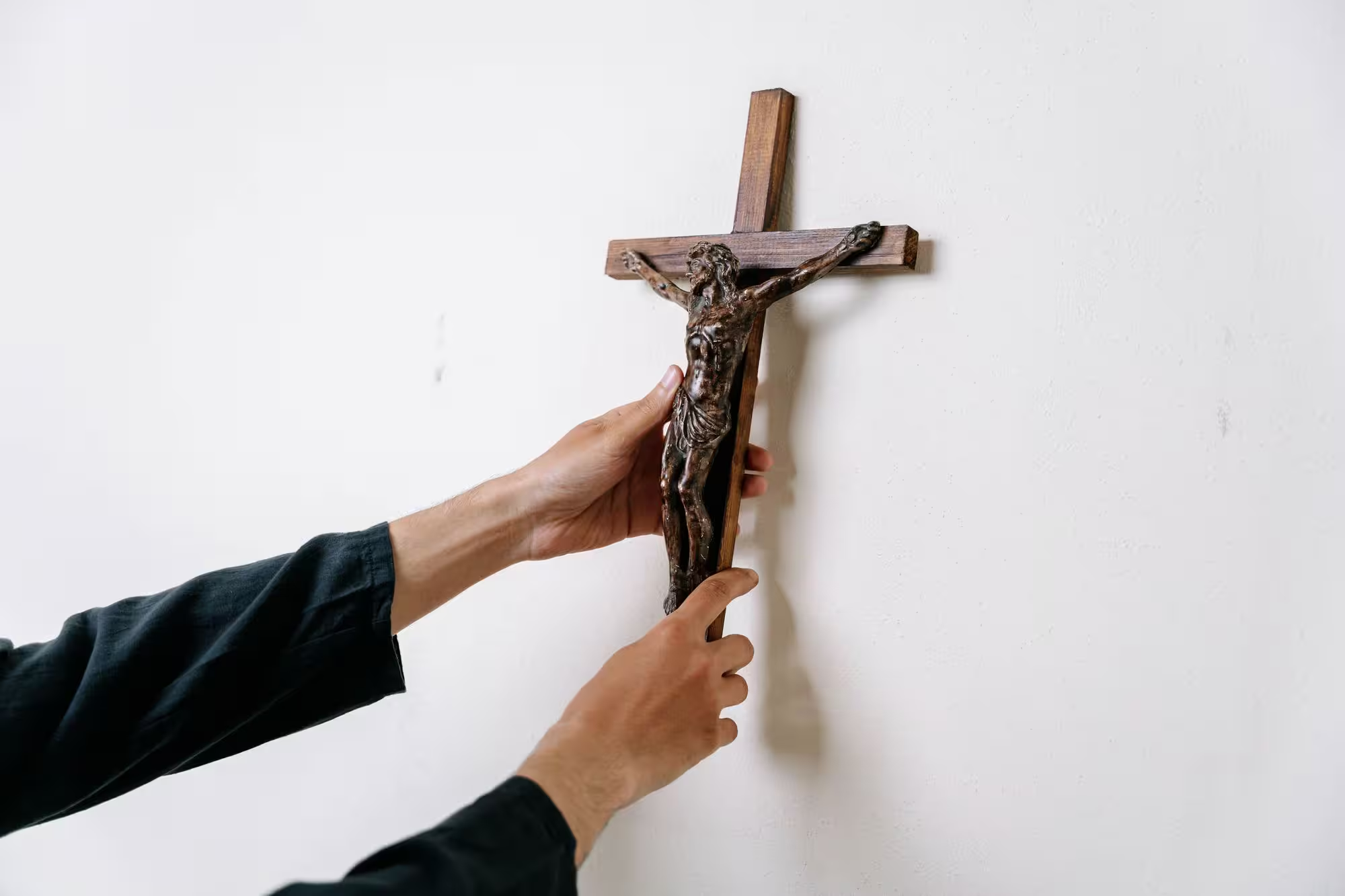
Every type of exorcism method, explained by a theologian. We explain what works and what doesn’t, and why, theologically.
Exorcism is spiritual warfare against demons. Demons do not have a body to kill, so the type of warfare which is waged against them is an area denial strategy where you cast them out of where they are, and then keep them and their influence permanently out of that battlefield.
There are two main ways of doing exorcism: a declaration where you exert some kind of authority to evict the demon, and a sanctification process where you use some kind of cleansing ritual to cause it to leave on its own accord. Declaration overpowers the demon, while sanctification removes the grounds it has to stay.
Exorcism by Declaration
A declaration from God is a prophecy. Prophecies are always 100% accurate and effective and direct people to follow God A declaration from a spirit other than God is a false prophecy. It can be accurate and effective but is often motivated by greed which is a form of idolatry A declaration that comes from self-will is presumption, and is either lying in the name of God or self-deception into thinking the word was from God Presumptuous declarations are ineffective as they rely on the power of self-will rather than the Holy Spirit to drive out the demon. If a deliverance minister commands a demon to leave and it does not, then you know the minister has spoken presumptuously, or at the very least, a mixture of God’s words and their own. Unfortunately, this describes a lot of deliverance ministries, even back to apostolic times Discernment is necessary to test a prophecy to see what parts of it are from God.
A declaration involving a prescribed act is a ritual. A ritual prescribed by God is worship, while a ritual prescribed by any other source is idolatry, whether it be from demons or self. Because God and demons can both do supernatural miracles, the result of the ritual does not determine whether a prophecy is from God or a demon; you have to ask whether the steps of that ritual are divinely prescribed.
For example, multiple religions have prescribed anointing rituals to drive out a demon; they work sometimes, but by whose power? If God prescribed that ritual through divine revelation, then it is by God’s power that the person is saved. But if a witchdoctor prescribed that ritual, then it is by the power of the witchdoctor’s demon that the person is delivered from the demon, but at the cost of being enslaved by a stronger one.
However, even if God prescribed a way of deliverance the first time it does not mean that He will prescribe those same steps te next time ; If you turn yesterday’s deliverance into a tradition that assumes God will contractually act in the same way in the future, then you are acting presumptuously. Anointing in the New Testament is more associated with physical healing than exorcism ; ; although it often coincides with exorcism in ministry There is no universal anointing ritual for exorcism in the Bible, though it may work in specific cases if God instructs you to do so. But don’t do it as a “just in case” ritual to help with exorcism.
Similarly, a ritual of spoken words is a recitation. You can passionately speak many phrases as the Gentiles do, but that’s not God’s prescribed way of praying Neither is exorcism through chanting, nor yelling out the demon from a person while claiming God gave you all authority to do things your way. The reason why so many declarative forms of exorcism are ineffective is because they are not God’s prescription for exorcism; they rely on the person’s self-will instead. Invoking God’s name and power using forms he did not prescribe is closer to blasphemy than prayer
For example, the Word of Faith movement believes the power comes from faith, and that faith comes from recitation. As long as you recite the prescribed words until you believe in them, then God will exorcise the demonic impediments to your health and wealth. This is an unbiblical heresy in two ways: first, the prayers are prescribed by a man, not by God, and second, faith comes by hearing, not by reciting However, if you perform Scripture recitation in response to demonic temptation, then you are using God’s prescribed way of fighting demons ;
That’s not to say demonic prescriptions for exorcism are ineffective. A sacrifice of shed blood is powerful because the life is in the blood It’s even more powerful when it is a human sacrifice, because humans are made in the image of God A pagan king even exorcised Israel from his land through the sacrifice of his heir Religious rituals to entreat a stronger demon to drive out a weaker one through a blood sacrifice exist in several religions ; ; The result is the person becoming infested with a stronger demon, or if the demon agrees to cohabit with the weaker one, then the person now has two
However, Christians can take heart that the blood of Jesus is most powerful sacrifice of all because he is both God and Man His royal blood is both divine and human, able to cleanse us from all sin Jesus died once and for all we only need to prophetically declare his finished work through communion Taking communion is a common practice for cleansing a place. If you have trouble exorcising a demon because it has grounds established by a blood covenant, try breaking that covenant with the new covenant made in Jesus’ blood A person can belong to either Jesus or a demon, but Jesus’ covenant is stronger.
Exorcism by Sanctification
There is another way in which you can cleanse the grounds through which a demon has established itself in a person. Clear the sin, and you clear the effects of sin, including sickness and demonization. Theologians call this process sanctification.
Sanctification in the New Testament is both a Christ-led, and a Holy-Spirit led process. Jesus cleanses his Church through the water of the Word Simply listening to the Word of God will clean you so listen to preaching! Preaching the Word and casting out demons go hand in hand as preaching convicts the hearers of their sins
However, your sins are the not the same as mine. The Holy Spirit convicts the world of sin, righteousness, and judgement and those that respond in confession have those sins forgiven and healed Confession is not for justification, that is, establishing your right position with God, but for sanctification, bringing the lived experience of your salvation in line with your position in Christ. Healing Methods Overview covers this process of sanctification in more detail. When applied to exorcism, it’s called inner healing: The use of diagnostic tools to identify sins to confess, and healing tools to remove those sins and the demons attached to them.
Exorcism by sanctification is a search and destroy mission for the sins that give demons grounds to harass you rather than a battle to overpower the demon itself. The person can self-report the sins they are aware of using cognitive diagnostic tools such as Emotion Paper, Story Filter, and What Comes to Mind. However, the person may not know all the sins that bind the demon to them. The Holy Spirit knows and gifts that word of knowledge to a community of believers through words in their mind, called an aural tool, or pictures in their imagination, called a visual tool, such as the Whiteboard method.
Finally, some deliverance ministries interview the demon to identify the sins which give it grounds to harass the person. Compelled testimony approaches must account for uncooperative and lying demons, and face little biblical support for them except perhaps Jesus asking the Gerasene demon its name but even that passage is not clear on whether Jesus was addressing the person or his demon.
Recommendation: Use Inner Healing Methods for Exorcism
In conclusion, Christianity has five main ways for exorcism: prophetic declaration, church-based rituals, biblical rituals, preaching, and the confession of sins. There is not just one way of doing exorcism as Christians disagree on who has the authority to do it. Some claim apostolic authority to drive out demons with just a word but it often doesn’t work because their authority is presumptive rather than God-given. Others place their exorcism hopes in the authority of priests to follow church-based exorcism rituals; however, such rituals are not found in Scripture except for anointing with oil and communion, and they don’t always work either. Still others insist on the sufficiency of preaching for exorcism, but have no answer when the demon prevents the person from understanding and accepting the gospel
That leaves the confession of sins, or inner healing methods, as the most accessible way to exorcise a demon. It does not require apostle or priest-level authority to overpower demons, because it deals with their sin grounds rather than the demon itself. Cleansing sins is not the work of a person, but of the Holy Spirit who lives in every Christian All we have to do is confess those sins to God and ask God to deliver us from demons, a biblical practice which all Christians can do.
Take-aways
Exorcism is by declaration or sanctification
Declaration focuses on the demon, while sanctification focuses on its sin grounds.
Christianity has five main ways for exorcism
They are prophetic declaration, church-based rituals, biblical rituals, preaching, and the confession of sins.
Exorcism by declaration requires authority
If you know someone who has the authority to drive out the demon, go to them.
Exorcism by sanctification requires confession
If you know how to follow the Holy Spirit for the conviction and confession of sins, go to Him.
Further Reading
The theological reflection section of Who Is Involved in Healing comes to the same conclusion as this article: prefer inner healing methods over authority and performance-based exorcism because God heals you because He loves you, not because you followed the right steps.
Healing Methods Overview summarizes the different healing approaches that could be used for exorcism. The Story Method and Whiteboard Method are examples of inner healing methodologies that can be adapted for exorcism–just ask God to remove any demons as a final step once you’ve followed those methods to remove the demon’s underlying sin grounds that bound it to the person.
Not every problem is caused by a demon and therefore requires exorcism. Unblocking Your Spiritual Senses will help you determine if a problem is caused by a demon, since demons require spiritual senses to perceive them, not physical ones.